
Why Are Mobile Pole Carts a Cross-Functional Tool in Both Medical and Industrial Settings?
A nurse documenting patient care at the bedside and a quality control inspector logging measurements at an assembly station are doing very different work. But they share a problem that looks the same from an engineering perspective: they need a digital interface at the point of work, and the point of work moves.
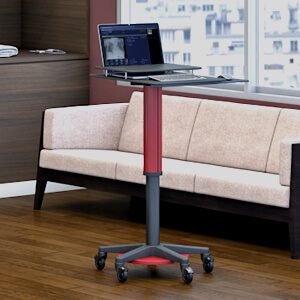
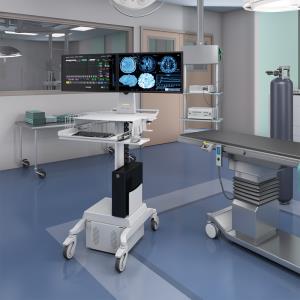
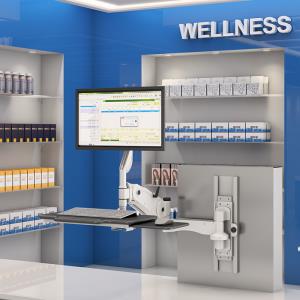
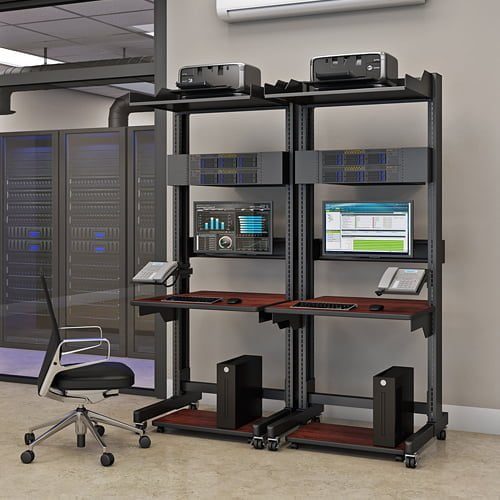
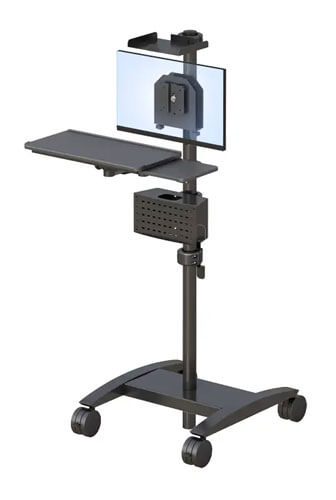
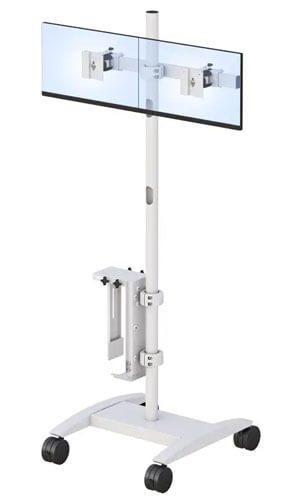
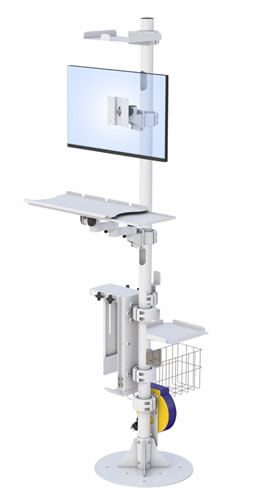
That shared problem is why mobile pole carts appear in hospital wards and semiconductor fabs, in community nursing and automotive manufacturing, in surgical suites and pharmaceutical cleanrooms. The form factor — a mobile platform with an adjustable pole mount for a display or computer, on castors, able to be positioned precisely and repositioned quickly — addresses the same fundamental requirement across environments that otherwise have almost nothing in common.
What changes between sectors is the specification. A medical pole cart in a hospital ward needs antimicrobial surfaces verified against the department’s specific cleaning agents, a UPS battery sized to a medication round, and a locking mechanism for controlled substances. An industrial pole cart on an electronics production floor needs ESD-safe surfaces, casters rated for the floor surface type, and an IP rating if the environment includes dust or moisture. The architecture is the same. The specification is entirely different.
This article covers what makes mobile pole carts effective in each environment, where the specifications converge and diverge, and how buyers in both sectors can approach the selection decision. The audience is clinical procurement managers, facilities directors, manufacturing operations managers, and industrial engineers who need a mobile workstation architecture for environments where fixed infrastructure doesn’t serve the workflow.
| Quick Answer — Mobile pole carts are effective in both medical and industrial settings because they solve a shared problem: bringing a digital interface to a mobile point of work. In healthcare, this means bedside documentation, medication verification, and clinical data access. In industrial settings, it means production floor data entry, quality control inspection, and assembly instruction reference. The architecture is identical; the specification diverges significantly between sectors — antimicrobial surfaces and UPS battery in clinical environments; ESD-safe materials, IP ratings, and industrial-grade casters in manufacturing. AFC Industries mobile pole carts are available in medical and industrial configurations with sector-appropriate surface, power, and mounting specifications. |
What Makes Mobile Pole Carts Effective in Clinical Environments?
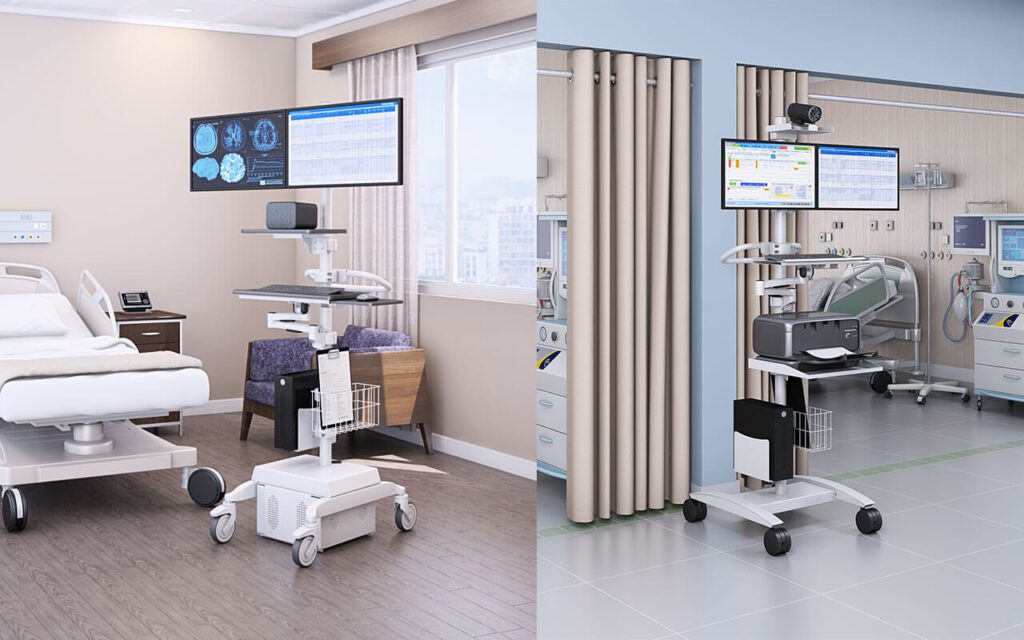
In healthcare, the mobile pole cart’s value is most clearly visible when you follow the workflow problem it solves. Every time a clinician leaves a patient to access a fixed workstation — to document, to verify, to look up a result — three things happen that the clinical environment would prefer not to happen: the patient interaction is interrupted, the clinician’s attention shifts from the patient to the workstation, and the documentation that follows is retrospective rather than contemporaneous.
Mobile pole carts eliminate those interruptions by bringing the workstation to the patient. The clinical applications are direct:
- Bedside documentation: Nurses and physicians document at the point of care rather than returning to a central station. Vital signs, assessments, and clinical notes are entered in real time against the patient’s EHR record, reducing the transcription errors and memory-dependent omissions that retrospective documentation produces.
- Medication administration verification: A pole cart with a barcode scanner enables closed-loop medication verification — scanning patient ID and medication barcode before administration. The Agency for Healthcare Research and Quality (AHRQ) identifies this as one of the highest-impact interventions for reducing adverse drug events, and it requires a mobile scanning platform at the bedside to function correctly.
- Vital sign recording: Blood pressure, oxygen saturation, and other measurements entered at the point of measurement, not recalled and entered later. For high-frequency monitoring on busy wards, the time saved and the documentation accuracy improvement are both clinically significant.
- Lightweight telehealth setups: Community nursing and outpatient clinic environments increasingly use pole carts as mobile telehealth platforms — camera, display, and connectivity on a compact mobile frame that can be positioned for a video consultation without the footprint of a full telemedicine cart.
The pole cart format is specifically suited to clinical environments where space is constrained. An emergency department bay, a single-occupancy ward room, a community nursing home visit — all have limited floor space relative to a standard medical cart. A pole cart’s narrower footprint and lighter weight make it more maneuverable in those environments than a full-size mobile workstation.
What Specific Clinical Workflows Do Pole Carts Support Best?
Pole carts are not the right answer for every clinical workflow. They are best suited to workflows that require a single display or compact computing platform, involve frequent repositioning between patients or rooms, and operate in environments where floor space is limited or a full cart footprint is impractical.
General ward medication rounds fit this profile well. A nurse moving room to room with a compact pole cart for barcode verification and documentation needs a lightweight, manoeuvrable platform with enough battery for a full round — typically 90 to 120 minutes on a standard ward. A full medical workstation cart is usually more equipment than the workflow requires and more difficult to manoeuvre in a busy ward corridor.
Community nursing home visits are the clearest use case for the pole cart format over any larger alternative. A community nurse working alone needs equipment they can carry from a vehicle, set up in a patient’s home, and transport without assistance. Weight is the primary specification: anything over 15–18kg becomes impractical for solo unassisted transport. A compact pole cart in the right weight bracket serves this workflow; a standard medical workstation cart does not.
Outpatient clinic consultation rooms also suit the pole cart format. A small consulting room with a single examination table and a clinician’s desk has limited floor area for a mobile workstation. A pole cart positioned alongside the examination table for the consultation, then moved to the corner when not in use, fits the room’s constraints in a way a larger cart does not.
For departments evaluating both pole cart and full workstation cart options, AFC Industries’ medical point-of-care carts and mobile pole carts cover both formats with clinical-grade surface specifications.
How Do Mobile Pole Carts Serve Industrial and Manufacturing Environments?
The industrial version of the ‘bring the interface to the work’ problem is, if anything, more acutely felt than the clinical version. A production floor or quality control environment may have dozens of workstations that need to be accessible to operators across a large floor area. Fixed terminals create travel time and workflow interruption every time an operator needs to log a result, reference an instruction, or check a specification.
Mobile pole carts on production floors address several specific industrial workflow requirements:
- Assembly instruction reference: Operators access work instructions, engineering drawings, and quality specifications at the assembly station. On complex assembly lines, instructions change between work orders. A mobile pole cart that can display the current instruction set at the exact assembly position removes the need for paper-based instructions or travel to a fixed terminal.
- Quality control inspection: IPC inspection and dimensional quality checks are performed at the point of production, not at a remote quality station. A pole cart with the measurement system display or the inspection reference system at the inspection point reduces the travel and transcription steps that introduce delay and error in manual quality processes.
- Production floor data entry: Manufacturing execution system (MES) data entry at the production point rather than at the end of a shift or at a remote terminal. Real-time production data has the same documentation accuracy advantage in manufacturing that bedside documentation has in clinical environments: contemporaneous entry is more accurate than reconstructed entry.
- Inventory and logistics management: Barcode or RFID scanning at the point of goods receipt, movement, or dispatch. A mobile pole cart with a scanning mount at the warehouse floor or receiving dock eliminates the fixed scanner installation constraints and allows scanning at any position in the facility.
The industrial environment introduces specification requirements that clinical environments generally do not. ESD (electrostatic discharge) safety is critical in electronics manufacturing and semiconductor environments where static discharge can damage components. An industrial pole cart in those environments requires ESD-safe surfaces, conductive casters, and grounding provisions. IP ratings for dust and moisture resistance are relevant in manufacturing environments where cleaning involves water or where dust from production processes is present. Neither of these requirements appears in clinical specifications.
Medical vs Industrial Pole Cart: Where Specifications Converge and Diverge
| Specification Factor | Medical / Clinical Pole Cart | Industrial Pole Cart |
| Primary use case | Bedside documentation, medication management, vital sign recording, telehealth consultation | Production floor data entry, quality control inspection, assembly instruction reference, inventory management |
| Surface material requirement | Antimicrobial-rated; compatible with hospital disinfectants (quaternary ammonium, IPA, chlorine-based, sporicidal agents) | Chemical-resistant for industrial cleaning agents; ESD-safe surfaces in electronics manufacturing; IP-rated for wet or dusty environments |
| Weight and mobility | Moderate — heavier carts acceptable in ward environments with good caster specification for nursing floor surfaces | Varies widely — lightweight for frequent repositioning on production lines; heavy-duty for fixed inspection stations |
| Height adjustment | Critical for multi-user clinical teams with varied heights; preset memory preferred for shift-to-shift use | Important for operator ergonomics across assembly shifts; often less critical for single-operator fixed stations |
| Power requirement | UPS battery for room-to-room clinical workflow; hot-swap capability for extended rounds | Wall-powered acceptable for fixed industrial stations; battery for mobile production-floor use |
| Regulatory compliance | IEC 60601-1 medical electrical equipment standard; antimicrobial surface certifications (EPA registration, ISO 22196); HIPAA data security for EHR access | ISO 9001 quality management; IPC inspection standards for electronics; OSHA ergonomic guidelines for manufacturing; ESD compliance (ANSI/ESD S20.20) where applicable |
| Typical environments | Hospitals, outpatient clinics, community health, surgical suites, radiology, pharmacy | Manufacturing floors, assembly lines, quality control labs, warehousing, logistics, semiconductor fabs |
What Should Buyers in Both Sectors Look for When Specifying a Pole Cart?
Despite the specification differences between sectors, the decision framework for pole cart selection follows the same structure in both environments. The questions are the same; the answers diverge based on the operating context.
| Pole Cart Specification Questions for Medical and Industrial Buyers
What is the floor surface type and what caster specification does it require? Hospital vinyl flooring, sealed concrete production floors, unsealed warehouse floors, and carpet all require different caster compounds and wheel configurations. The wrong caster on the wrong floor creates resistance, instability, or surface damage. Specify caster type from the floor surface, not from a generic ‘suitable for most environments’ claim. What is the operating environment’s cleaning or chemical exposure? Clinical environments: list every disinfection agent used and verify surface compatibility. Industrial environments: identify any chemical exposure from production processes, cleaning agents, or lubricants that the cart surface will encounter. Incompatible surfaces degrade visibly and create compliance risk in regulated environments. What is the payload — display, computer, peripherals, accessories? Calculate the total weight of everything mounted on the cart. Verify the pole and mount system’s rated load against this total with margin. An overloaded pole mount creates instability and accelerated wear at the pivot points, producing a progressively less stable working platform over time. Is the environment powered or does the cart need battery autonomy? Clinical environments without consistent wall power access require UPS battery; size to the full workflow circuit, not a single interaction. Industrial pole carts in fixed stations can be wall-powered; mobile production-floor use requires battery specification matched to shift length. Does the environment have ESD, IP, or regulatory compliance requirements? Electronics manufacturing and semiconductor environments require ESD-safe specification throughout. Wet or dusty industrial environments require IP-rated enclosures. Clinical environments may require IEC 60601-1 compliance for electrical safety and EPA-registered antimicrobial surfaces. Identify the applicable standards before specifying, not after. |
AFC Industries’ mobile pole carts are available in medical and industrial configurations. For clinical environments, see also the medical point-of-care cart range for full workstation cart options. For industrial and manufacturing environments, the industrial workstation range covers heavy-duty and ESD-compliant configurations. Contact the AFC Industries team with your environment type, floor surface, cleaning protocol, and payload requirements to discuss the right specification.
The Same Problem, Two Very Different Specifications
The mobile pole cart’s cross-sector utility comes from addressing a problem that is genuinely the same across environments — a digital interface needs to be at a point of work that moves — while the specification that makes it work in each environment is genuinely different. A medical pole cart deployed on an electronics production floor without ESD-safe surfaces creates static discharge risk. An industrial pole cart deployed in a clinical environment without antimicrobial-rated surfaces fails the infection control requirements within months.
The architecture — pole, mount, mobile platform, adjustable height — is neutral. The specification around it is not. Getting the specification right requires knowing the operating environment’s specific requirements, not just selecting the nearest available product. The five questions in the checklist above are the starting point for that specification in either sector.