

Why Are Mobile Laptop Carts Suddenly Everywhere in Hybrid Workplaces?
If your office swapped assigned desks for shared ones sometime in the last year, you’ve probably already run into the problem nobody warns you about: someone has to actually carry their laptop, their charger, and whatever else they need to wherever the open spot happens to be that day. A rolling backpack works for a while. It stops working the moment someone needs a real surface to type on, a screen at the right height, and somewhere to plug in without crawling under a desk.
That’s the gap a mobile laptop cart is built to close. It gives a hot desking setup or any shared workstation a stable, adjustable spot that moves with the person instead of staying fixed to one desk. If your facility is weighing whether to add carts like this, here’s what actually matters before you request pricing.
What Should You Look For in a Mobile Laptop Cart?
Does the Work Surface Material Actually Matter Day to Day?
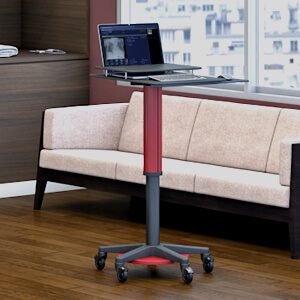
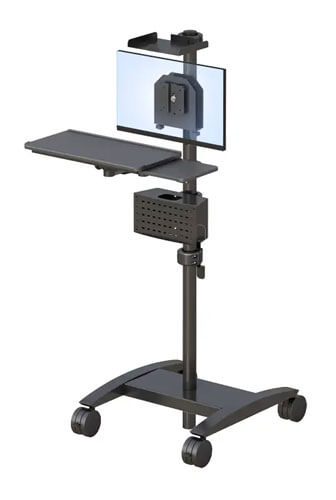
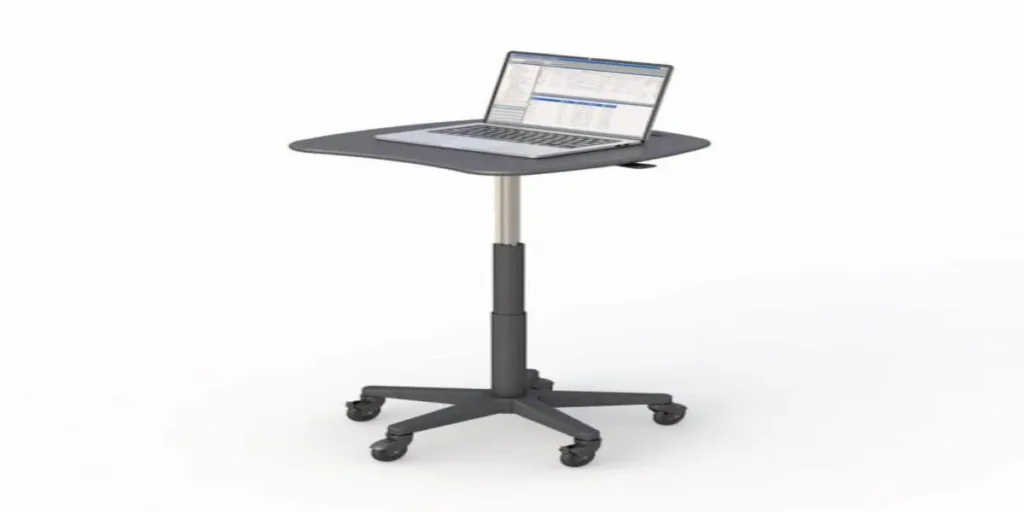
Yes, more than people expect. A cart that gets used by five or six different people across a week needs a surface that can be wiped down quickly between uses without wearing out. AFC’s mobile laptop cart uses an HDPE top, which stands for high density polyethylene, a hard plastic that resists scratching and holds up under regular disinfecting. It’s the same reason this cart shows up in medical settings, where surfaces get cleaned constantly and can’t afford to degrade.
If your team is sharing one cart across a rotating schedule, that durability isn’t a nice to have. It’s the difference between a cart that still looks and functions like new after six months and one that starts cracking or staining within weeks.
Why Does Height Adjustment Matter More With Shared Workstations?
When one person owns a desk, they set the height once and forget about it. When five people share a cart, that convenience disappears unless the cart adjusts fast and easily. This cart uses a pneumatic lever on the side, meaning a gas spring mechanism rather than a motor, and it moves smoothly across a range from 24 inches up to 34 inches. That covers most standing and seated preferences without anyone needing to fight the mechanism or wait for a slow motorized lift.
For a shared setup, quick adjustment matters just as much as the range itself. Nobody wants to spend two minutes cranking a desk into position before they can start working.
Does a Small Footprint Mean Less Stability?
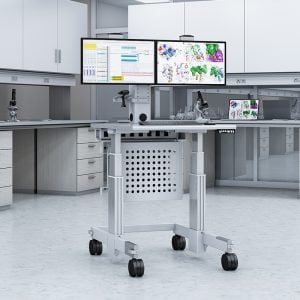
Not with the right base design. This cart runs on a 24 inch diameter five prong base with five casters total, and the front two lock in place. That combination gives you a compact enough footprint to move through tight hallways or between workstations, while still holding steady once it’s parked and locked. A smaller footprint doesn’t automatically mean a shakier setup. It just means the engineering has to do more work in a tighter space, and this base handles that trade off well.
Is a Mobile Laptop Cart the Right Fit for Your Space?
Is This Better Than Just Assigning Everyone a Fixed Desk?
It depends on how your office actually operates day to day. Hot desking, which just means employees don’t have one permanent desk and instead use whatever workstation is open, has become a lot more common as companies try to fit more people into less office space without buying furniture for every single employee. A mobile cart supports that model directly, since it moves with the workflow instead of sitting empty half the week the way a fixed desk sometimes does.
If your office still gives everyone a dedicated spot, a cart like this might only make sense for overflow situations, training rooms, or temporary staff. But if you’re actively shifting toward shared seating, this is exactly the kind of equipment that setup depends on.
What Should You Check Before You Request a Quote?
A few questions are worth answering before you reach out. How many carts does your rotation actually need, based on how many people share a shift or a floor? Does your space have enough clearance for a 24 inch base to move between desks comfortably? Do your teams need locking casters specifically, or is one locking wheel enough for how the cart gets positioned during use? Working through these ahead of time means the quote you get back actually matches your setup instead of needing a second round of questions.
How Are Teams Actually Using These Carts Right Now?
What Does a Typical Shared Workstation Setup Look Like With One of These Carts?
In most offices running this way, someone rolls the cart to whatever open spot is available, unlocks the front casters, wheels it into place, and locks it again. The pneumatic lever brings the surface up or down to match their preference in a few seconds, they plug in, and they’re working within a minute or two. It’s a small routine, but it’s the difference between hot desking that actually feels smooth and hot desking that feels like a daily inconvenience.
Where Else Do Teams Use This Same Cart Beyond a Standard Office?
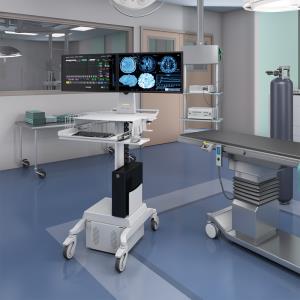
This exact cart is also listed under medical computer carts and classroom laptop desks, which tells you it’s already proven itself outside a typical office. In healthcare settings, mobility and an easy to disinfect surface matter for the same reasons they matter in a shared office, just with higher stakes around cleanliness. In classrooms, the same height adjustment and rolling base let a single cart move between rooms or stations as needed. None of that means the office version needs anything extra. It just means the design has already been tested across settings with different daily demands.
Frequently Asked Questions
Does the work surface material actually matter day to day?
Yes. A durable, easy to clean surface like HDPE holds up better under repeated use by different people than a standard laminate top would.
Why does height adjustment matter more with shared workstations?
Because different people use the same cart throughout the day, a quick pneumatic adjustment from 24 to 34 inches lets each person set their own comfortable height in seconds.
Does a small footprint mean less stability?
No. A 24 inch five prong base with two locking front casters keeps the cart steady once it’s positioned, even with a compact overall size.
Is this better than just assigning everyone a fixed desk?
For offices moving toward hot desking or shared seating, a mobile cart fits that workflow better than a fixed desk would, since it moves with demand instead of sitting unused.
Where else do teams use this same cart beyond a standard office?
The same cart is also used in medical and classroom settings, where mobility and easy cleaning matter just as much as they do in a shared office.