






Is Your Workstation Desk Built to Last, or Just Built to Sell?
There’s a shift happening in how people shop for furniture right now, and it’s not subtle. After years of cheap, trend-driven pieces that looked fine in photos and fell apart within a couple of years, more people are asking a different question before they buy. Not “does this look good,” but “will this actually still work in five years.” That question matters just as much for a workstation desk as it does for a sofa or a dining table, maybe more, since a desk gets used every single day, holds real weight, and takes daily wear that a lot of furniture never sees.
A desk that looks solid in a product photo can still have a thin steel frame, weak joints, or a laminate surface that starts peeling within a year. The difference between a desk built to last and one built to sell usually isn’t visible until you’ve owned it for a while, which is exactly why it’s worth checking before you buy rather than after something goes wrong.
This guide walks through what actually signals durability, when paying more upfront is worth it, and what a well-built desk should still look like years down the line.
What Actually Makes a Workstation Desk Durable?
A durable workstation desk depends on frame material, joint construction, surface finish quality, and weight capacity, since these determine whether a desk holds up to years of daily use or starts wobbling within months.
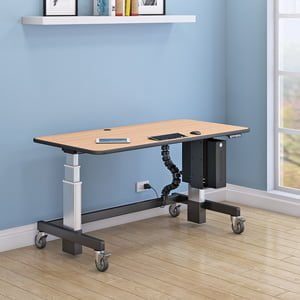
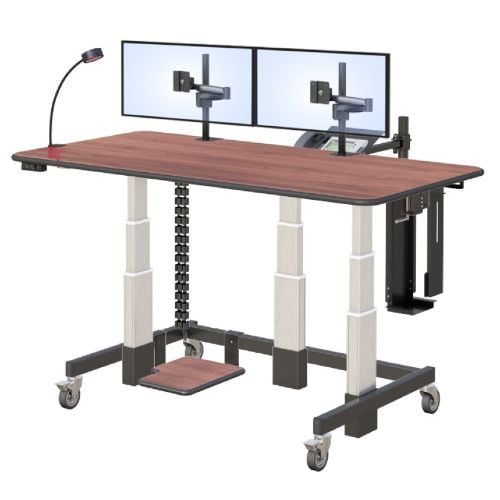
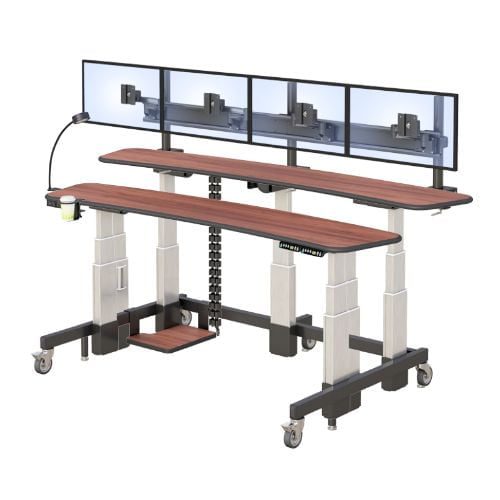
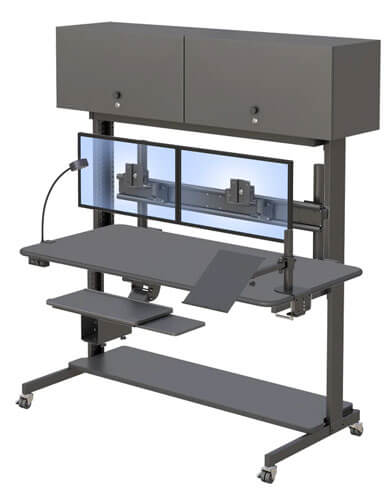
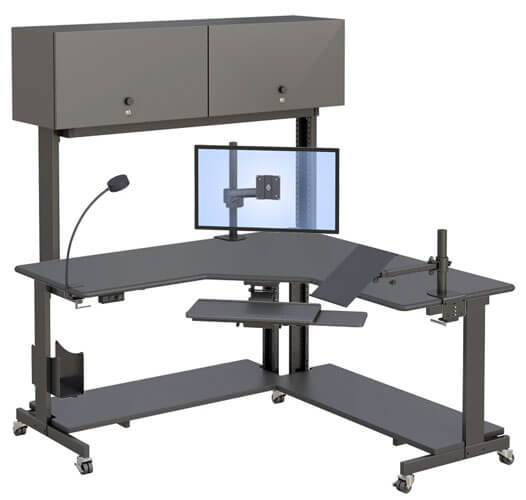
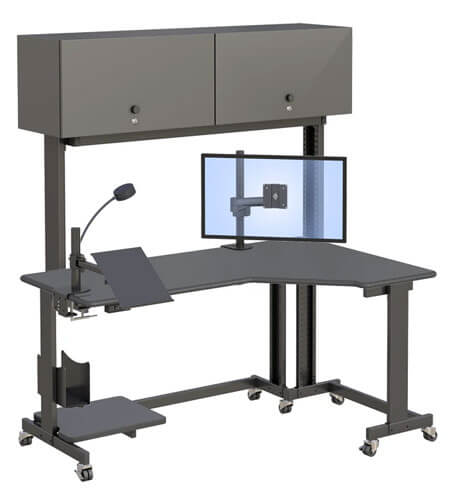
Frame material is the first thing worth checking, and it matters more than people expect. A steel frame holds up to daily stress in a way that thinner metal or particleboard construction simply doesn’t. AFC’s ErgoTech desk, for example, uses a steel frame paired with a laminated surface finished in bumper molding along the edges, which protects the most heavily used part of any desk, the edge where hands, elbows, and equipment make constant contact.
Joint construction is the part most people never think to check, but it’s where cheap furniture usually fails first. If two pieces are held together with basic screws into soft material rather than proper mechanical fasteners, the joint loosens with use, and that’s when the wobble starts. Weight capacity matters too, and not just on paper. A desk rated for a certain load that’s actually holding a monitor, keyboard, CPU, and accessories at the upper end of that rating will show stress faster than one built with margin to spare.
A few things worth checking before you buy:
- Frame material. Steel typically outperforms lighter metal or wood composite frames under daily stress.
- Joint construction. Ask how pieces are actually fastened together, not just what the desk is made of.
- Surface finish. Bumper-molded or reinforced edges hold up better where hands and equipment make constant contact.
- Weight capacity. Compare it honestly against what you’ll actually be putting on the desk, not just the minimum.
There’s useful context in what the anti-fast-furniture movement actually looks for in construction quality if you want a deeper look at why more buyers are prioritizing build quality over price alone this year.
Is It Worth Paying More for a Longer-Lasting Workstation Desk?
Paying more upfront for a durable workstation desk is worth it if you’ll use it daily for years, while a cheaper option may be fine for short-term or occasional use.
This really comes down to simple math once you look at it honestly. A cheaper desk that needs replacing every two or three years ends up costing more over a decade than a well-built desk purchased once and used for that same stretch of time, not even counting the hassle of replacing it or the daily frustration of using furniture that’s already starting to wobble.
If you’re setting up a workstation you’ll sit at every single day for years, the durable option is almost always the better financial decision, not just the more comfortable one. Where it gets more reasonable to go with a cheaper desk is short-term use, a temporary setup, or a space you know you’ll be moving out of soon.
In those cases, spending more on longevity you won’t actually benefit from doesn’t make much sense.
A simple way to think it through:
- Will this desk be used daily for several years, or is this a short-term setup?
- Have you replaced cheap furniture before because it didn’t hold up? That’s worth factoring in.
- Does the math actually favor paying more once, versus replacing something cheaper multiple times?
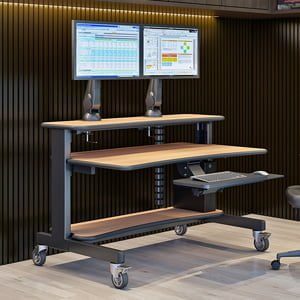
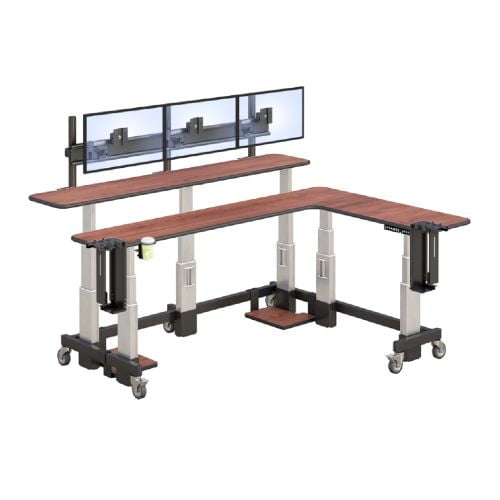
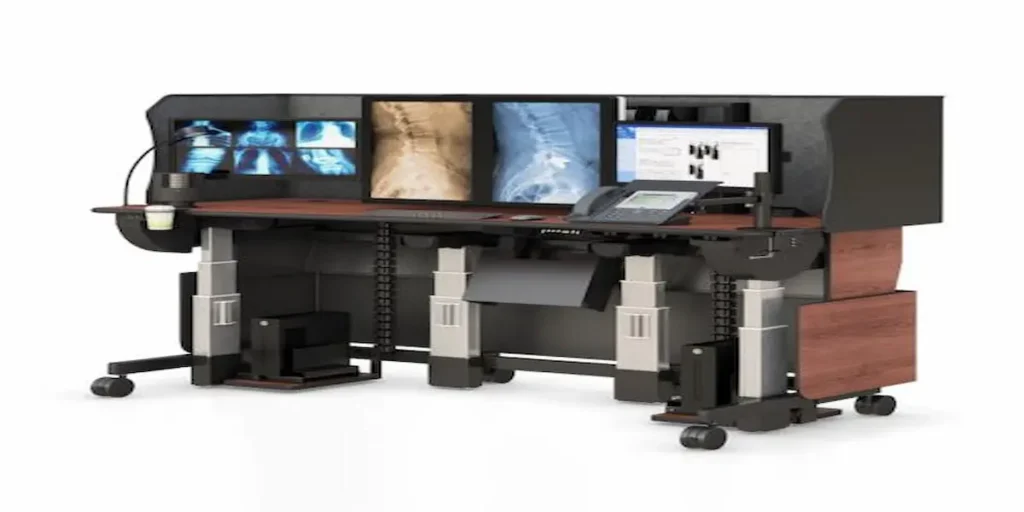
Worth browsing AFC’s IntelliCart dual-level desk configurations if you’re leaning toward a long-term investment rather than a short-term fix.
What Does a Desk That’s Actually Built to Last Look Like After Years of Use?
A well-built workstation desk should show minimal wobble, no surface delamination, and fully functional hardware even after years of daily use, not just when it’s new.
Picture two identical-looking desks purchased the same year. One uses a thin frame and basic screw joints, the other uses a steel frame with proper mechanical fasteners. Within a year or two, the difference becomes obvious. The cheaper desk starts to wobble slightly when typing, the laminate edges begin peeling at the corners, and the monitor arm no longer holds its position without slipping. The better-built desk shows almost none of that.
The joints stay tight, the surface stays intact, and the equipment stays exactly where you left it. That’s really the entire point of checking construction quality before buying rather than after, since the difference doesn’t show up on day one. It shows up two or three years in, right when replacing the desk becomes an expensive and annoying problem instead of a simple decision made in advance.
A few practical checks before buying:
- Check the frame material and joint construction before buying, not after something breaks.
- Ask about warranty length and exactly what it covers.
- Compare weight capacity honestly against your actual equipment load.
- Look for reinforced corners and edges where daily wear concentrates first.
- Revisit the desk’s condition periodically instead of assuming it will hold up indefinitely on its own.
Frequently Asked Questions
How long should a good workstation desk actually last?
A well-built workstation desk with a steel frame and solid joint construction should last a decade or more under daily use. Cheaper desks with weaker materials often start showing wear within two to three years.
What materials make office furniture more durable?
Steel frames, reinforced joints, and high-quality laminate surfaces with protected edges tend to hold up best under daily use. Weaker materials like thin particleboard or basic screw joints typically wear out much faster.
Is steel frame furniture better than wood frame furniture?
Steel generally holds up better under repeated daily stress and heavier equipment loads, especially in a workstation setting. Wood can still be durable if it’s solid and well constructed, but it’s more sensitive to moisture and wear over time.
How can you tell if a desk is poorly made before buying it?
Check joint construction, frame material, and edge finishing rather than relying on how the desk looks in photos. Ask specific questions about how pieces are fastened together and what the warranty actually covers.
Does a longer warranty actually mean better build quality?
Not always, but it’s a useful signal worth checking. A manufacturer confident in their construction is more likely to offer a warranty that reflects real durability, rather than one that expires right around when problems typically start.