


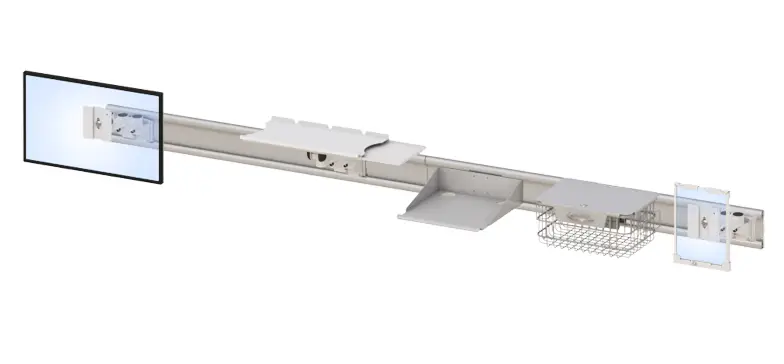
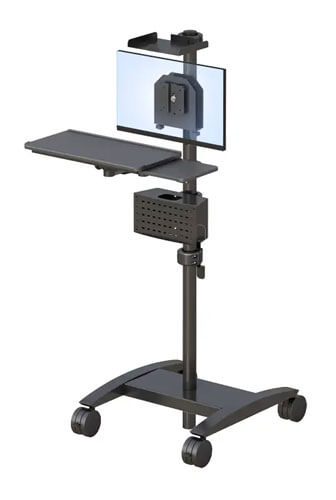
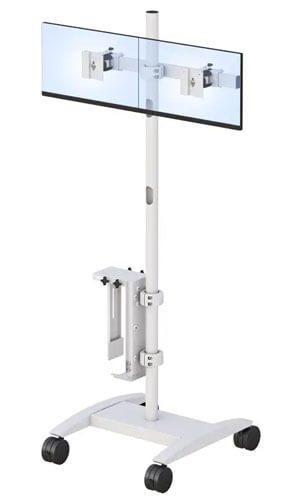
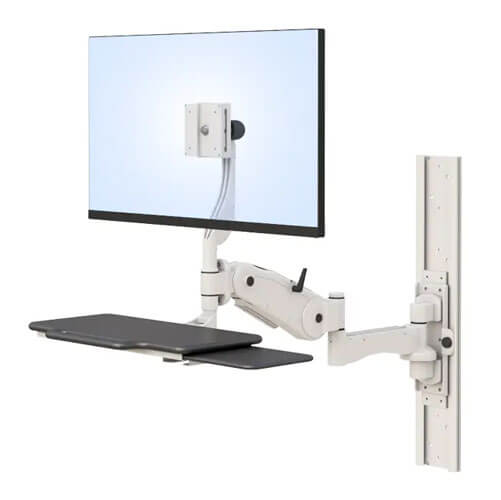
Federal Return-to-Office Mandates Are Reshaping Government Workstation Computer Desk in 2026
Federal return-to-office policy has been one of the more disruptive workplace shifts of the past couple of years, and agencies are still catching up to it in practical terms. A lot of government offices spent the remote-work era with fewer people physically at desks, which meant furniture and workspace planning took a back seat. Now that more federal employees are back in the building full time, agencies are running into a problem that sounds simple but isn’t, they don’t have enough properly equipped workstations for the number of people actually showing up every day. A computer workstation desk built for durable, high-frequency government use is a different purchase than the same desk bought for a private office that sees moderate daily traffic. Procurement teams working through this shift also have to navigate GSA Schedule requirements, which narrows the list of vendors who can actually supply what’s needed without a lengthy separate contracting process. This guide covers what to look for in a workstation desk built for federal office use, how to think through procurement timing, and what a well-equipped setup actually looks like once agencies bring people back in numbers.
What Should You Look for in a Government-Ready Workstation Desk?
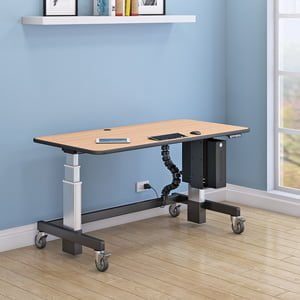
A government-ready workstation desk needs GSA Schedule availability, durable daily-use construction, and configuration flexibility, since federal offices typically need to outfit many desks at once under specific procurement rules.
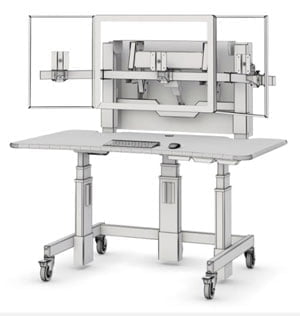
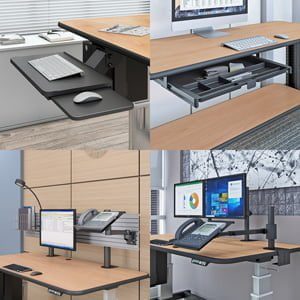
GSA Schedule availability matters more than almost anything else in this specific buying situation. A desk that meets every functional requirement but isn’t available through a GSA Schedule contract creates a procurement headache that can delay an entire office buildout. Working with a GSA Schedule Holder simplifies that process considerably, since it means the vendor has already gone through the vetting required for federal purchasing. Durability matters just as much once return-to-office volume kicks in. A desk built for occasional use in a mostly-remote office won’t hold up the same way under daily, full-time use by a returning workforce, and agencies replacing furniture again within a year or two waste both budget and time. Configuration flexibility rounds it out, since large-scale office buildouts rarely involve identical needs across every desk. A desk that can be specified to different widths, monitor configurations, or storage needs gives procurement teams room to fit varied roles without ordering entirely different product lines for each one.
A few things worth checking before you buy:
- GSA Schedule status. Confirm the vendor is an active GSA Schedule Holder before starting the procurement process.
- Daily-use durability. Match construction quality to actual full-time daily use, not occasional or part-time office presence.
- Configuration options. Look for desks that can be specified differently across roles without switching vendors or product lines.
- Lead time. Large office buildouts take time to manufacture and ship, so factor that into your return-to-office timeline early.
There’s useful context in current federal return-to-office implementation trends if you want a deeper look at how agencies are approaching this transition operationally.
Is a Custom-Configured Workstation Right for Your Agency, or Does Standard Work?
A custom-configured workstation makes sense for agencies with varied roles and space constraints, while a standard configuration works fine for large-scale buildouts where most positions have similar needs.
This decision usually comes down to how uniform the workforce actually is. If most returning employees are doing similar work with similar equipment needs, a single standard configuration ordered at scale is typically faster and more cost-effective than specifying different builds role by role. But agencies with a genuine mix of roles, some staff needing multiple monitors, others needing more storage, others working in tighter floor plans, often find that a handful of custom configurations built to specification actually saves money and hassle compared to over-buying a single generic desk type that doesn’t quite fit half the positions it’s assigned to. Neither approach is universally better. It depends on how much variation actually exists across the workforce being outfitted.
A quick way to think it through:
- Are most returning positions doing similar work with similar equipment needs, or is there real variation across roles?
- Is floor space consistent across the office, or does layout vary significantly by location?
- Would ordering one standard configuration at scale actually save time, or would it mean overbuying for some roles and underbuying for others?
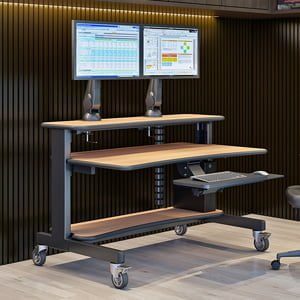
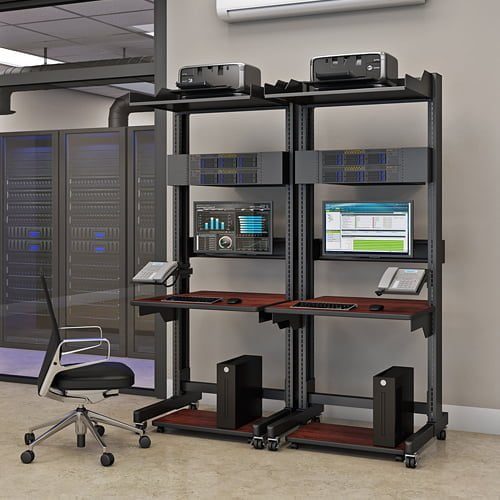
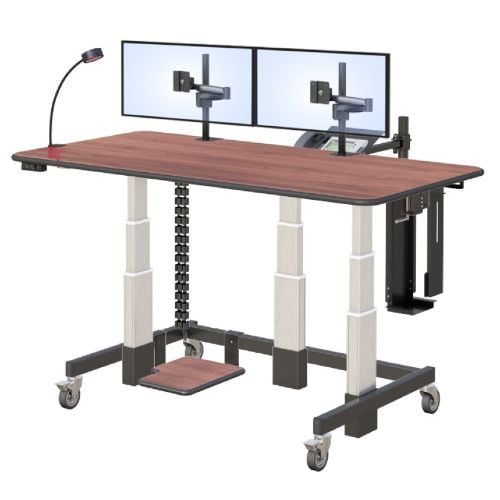
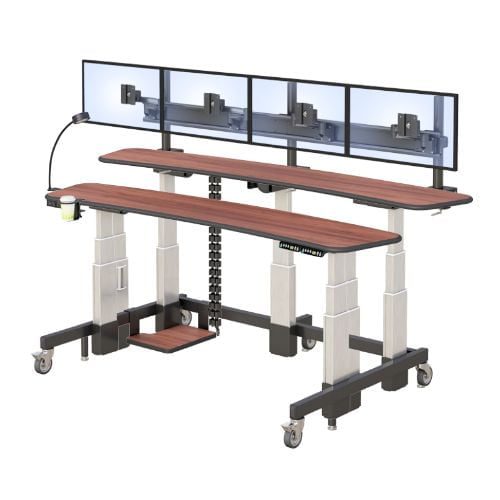
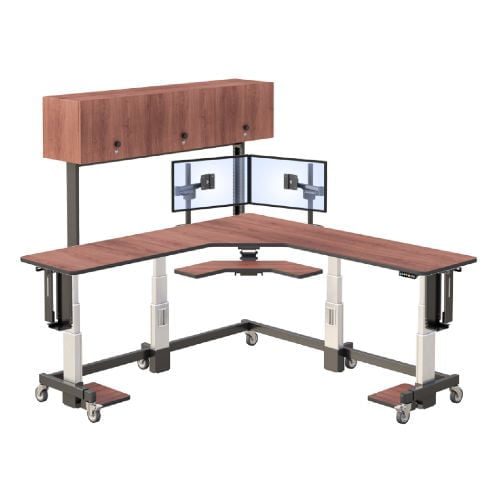
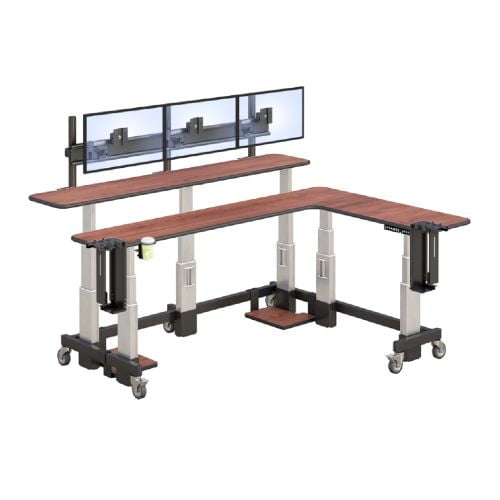
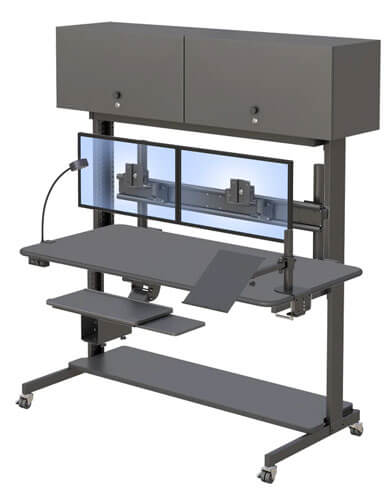
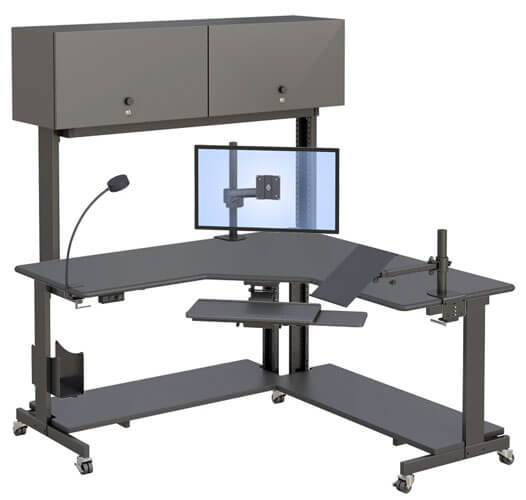
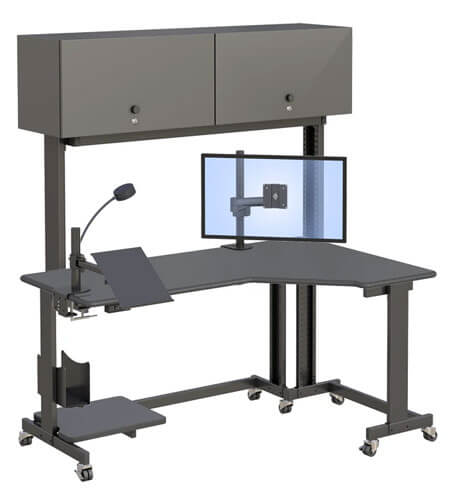
Worth browsing AFC’s IntelliCart dual-level desk configurations to compare standard versus configurable options for your agency’s specific rollout.
What Does a Full-Scale Government Office Buildout Actually Look Like?
A well-planned government office buildout matches workstation specifications to actual role requirements, orders with realistic lead times factored in, and confirms GSA procurement compliance before the process begins, not after.
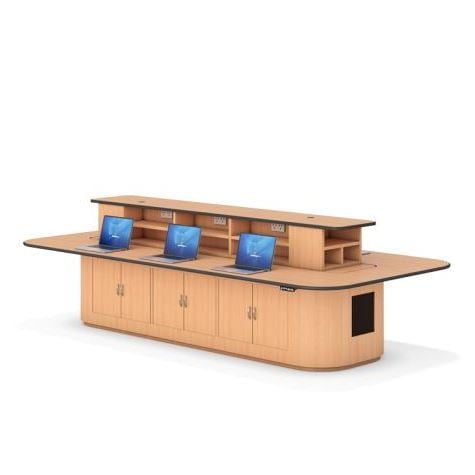
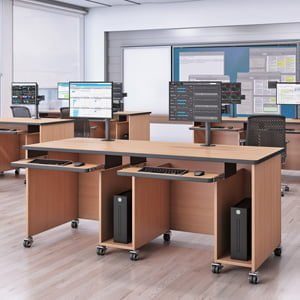
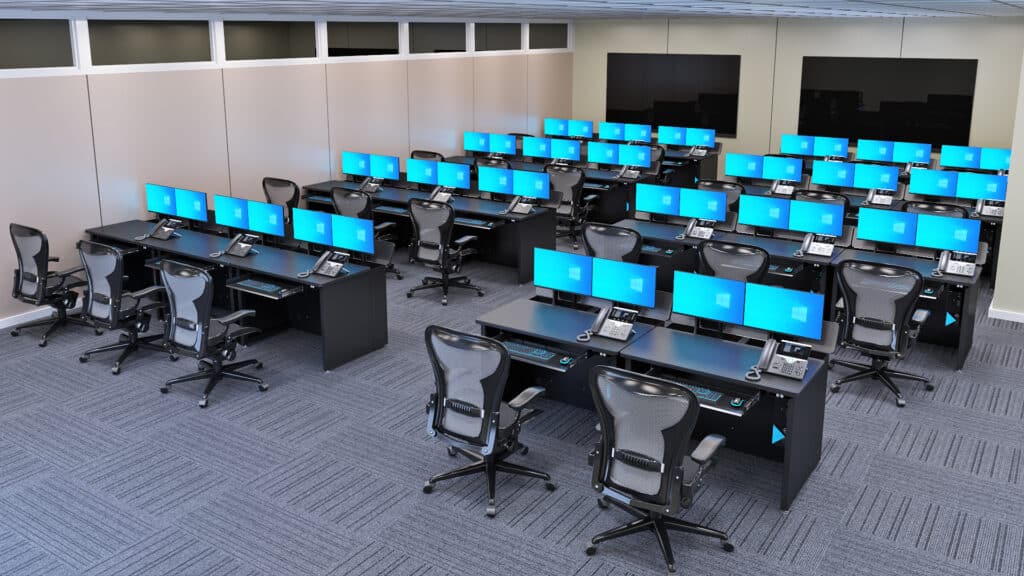
Picture an agency bringing an entire division back to in-person work after an extended remote period. Without early planning, that often means a rushed order placed close to the return date, limited configuration options because of the time crunch, and a scramble to confirm GSA compliance after contracts are already in motion. With proper planning, the same buildout starts with an honest assessment of role variation across the division, a procurement timeline that accounts for realistic manufacturing lead times, and GSA Schedule compliance confirmed before any purchase order goes out. The difference isn’t dramatic in any single step, but it adds up to a buildout that actually fits the workforce on day one, rather than furniture that gets worked around for the next several years.
Frequently Asked Questions
Why does GSA Schedule status matter for government office furniture purchases?
GSA Schedule status allows federal agencies to purchase directly from a pre-vetted vendor without a separate lengthy contracting process. This significantly speeds up procurement for large-scale office buildouts tied to return-to-office timelines.
How long does a government office furniture buildout typically take?
Timelines vary based on order size and configuration complexity, but large-scale buildouts should account for realistic manufacturing and shipping lead times well before the intended return-to-office date, not scheduled at the last minute.
Should every desk in a return-to-office buildout be identical?
Not necessarily. Agencies with uniform roles often benefit from a single standard configuration ordered at scale, while agencies with varied roles and space constraints may save money with a few different configurations built to specification.
What makes office furniture durable enough for full-time federal use?
Furniture built for full-time daily use typically features stronger frame materials and reinforced joints compared to furniture designed for occasional or part-time office presence. Matching construction quality to actual usage volume prevents early replacement costs.
Does federal return-to-office policy affect all agencies the same way?
No, implementation varies by agency based on staffing levels, existing office capacity, and specific mandates. Some agencies are further along in their buildout process than others, which affects procurement urgency and timeline planning.