

Can a Mobile Computer Cart Actually Help With the 2026 Nursing Documentation Burden?
Nurse burnout has been a serious problem for years, but the conversation around it has gotten more specific recently. It’s not just long shifts and short staffing anymore, though those remain real and significant factors. Documentation workload has been consistently named as one of the top contributors nurses point to when describing what’s actually wearing them down day to day. That’s a meaningful shift, because it points to something more fixable than the broader staffing crisis.
A mobile computer cart isn’t going to solve a nationwide nursing shortage, and it would be dishonest to suggest otherwise. What it can do is remove a specific, repetitive source of friction, the walking back and forth to a fixed workstation that happens dozens of times across a single shift just to update a chart or check an order.
That’s a smaller problem than burnout as a whole, but it’s a real one, and it’s one that better equipment can actually address. This guide looks at what to check in a cart built for that purpose, how to tell if a cart is even the right fix for your unit, and what the difference actually looks like across a real shift.
What Should You Look for in a Cart That Reduces Documentation Friction?
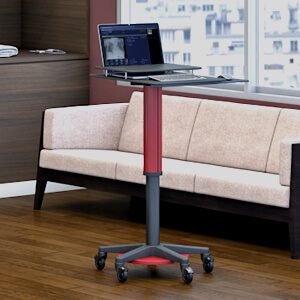
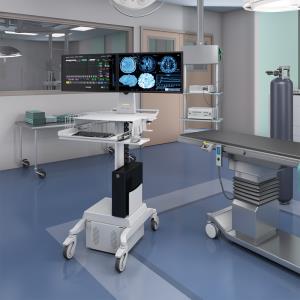
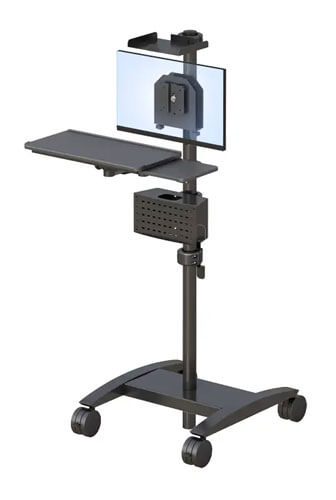
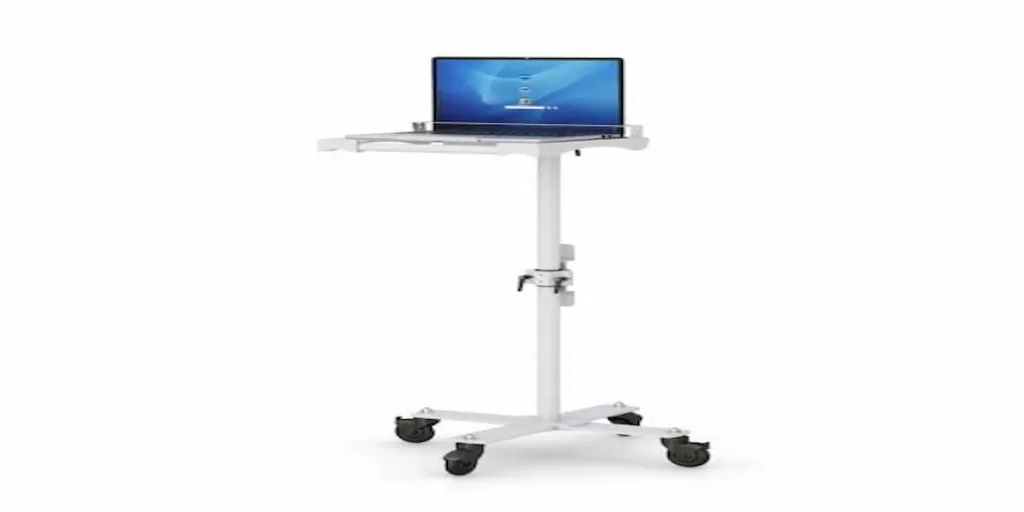
A cart that genuinely reduces documentation friction needs enough battery life for a full shift, quick and quiet mobility between rooms, and an easy-to-clean surface that doesn’t slow down infection control between patients.
Every one of these details matters more than it sounds like on paper. Battery life is the most obvious one, since a cart that dies halfway through a shift creates a new problem instead of solving the original one. It’s worth checking actual runtime under real use rather than trusting a general marketing estimate.
Caster quality affects daily speed more than most people expect walking in. A cart that rolls smoothly and quietly between rooms saves real time and reduces physical strain compared to one that catches on thresholds or requires extra effort to steer. Surface cleaning time matters just as much in a clinical setting, where proper disinfection between patients isn’t optional.
An antimicrobial surface treatment means the material is designed to resist bacterial growth between cleanings, which can shorten the time spent on that step without cutting corners on infection control. None of these features are dramatic on their own, but stacked together across dozens of patients in a shift, they add up to real time back.
A few things worth checking before you buy:
- Battery runtime. Confirm it genuinely covers a full shift under real use, not a best-case estimate.
- Caster quality. Smooth, quiet mobility across different flooring types saves time and reduces physical strain.
- Surface material. Antimicrobial treatment options can shorten cleaning time between patients without compromising infection control.
- Overall setup speed. A cart that takes too long to log into or position at the bedside undercuts its own purpose.
There’s useful context in documentation workload as a leading driver of nurse burnout in 2026 if you want to see the actual data behind why this specific friction point matters so much right now.
Is a Mobile Cart the Right Fix, or Does Your Unit Need a Different Solution?
A mobile cart helps most when the friction is physical, walking distance and repeated trips to a fixed station, while units struggling more with system complexity or alert fatigue need software and workflow changes instead.
It’s worth being honest about this distinction before spending on new equipment. If your unit’s biggest complaint is nurses walking back and forth constantly to update charts or check orders, a well-equipped mobile cart addresses that directly.
But if the real problem is a clunky electronic health record system, constant alert fatigue from poorly tuned notifications, or documentation requirements that are simply excessive regardless of where the nurse is standing, a cart won’t fix any of that. And if the core issue is short-staffing itself, no piece of equipment changes that reality.
The value of a mobile cart is specific and physical, it removes wasted steps and repeated trips. It’s not a substitute for adequate staffing or better system design, and treating it as one would be setting expectations that can’t be met.
A quick way to think it through:
- Is the main complaint physical, walking distance and repeated trips to a station?
- Or is it more about system complexity, alert fatigue, or documentation requirements themselves?
- Is understaffing the actual root issue, in which case no equipment purchase addresses it directly?
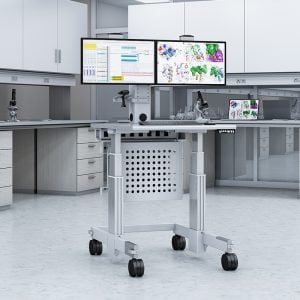
Worth browsing AFC’s laptop and tablet cart options if physical mobility does turn out to be the specific friction point on your unit.
What Does Reduced Documentation Friction Actually Look Like on a Shift?
In practice, reduced documentation friction means a nurse updates a chart at the bedside and moves straight to the next patient, instead of walking back and forth to a fixed station dozens of times across a shift.
Picture a med-surg nurse managing six patients across a shift. Without a cart, updating each chart means walking back to a shared workstation after every room, waiting if it’s occupied, then walking back again for the next update. Across six patients and multiple documentation touchpoints per patient, that adds up to a significant amount of walking and waiting that has nothing to do with actual patient care.
With a properly equipped cart, that same nurse documents right at the bedside and moves directly to the next room. The time saved isn’t dramatic in any single instance, but multiplied across a full shift and a full patient load, it becomes a meaningful reduction in wasted motion, exactly the kind of small, physical inefficiency that current 2026 burnout data points to as a real contributing factor.
Frequently Asked Questions
Does using a mobile computer cart actually reduce nurse burnout?
It can help with one specific piece of it, the physical friction of walking back and forth to a fixed workstation. It doesn’t address staffing shortages, system complexity, or other major contributors, so it’s one part of a larger solution, not a fix on its own.
How much time can a mobile cart save during a shift?
The time saved depends heavily on patient load and unit layout, but reducing repeated walking to a fixed station across dozens of documentation touchpoints in a shift adds up to a meaningful amount of reclaimed time.
What is the biggest cause of nurse documentation burden?
Current 2026 survey data points to a combination of factors, including complex system interfaces, redundant data entry across multiple systems, and sheer documentation volume relative to available time during a shift.
Are mobile computer carts worth the investment for a busy unit?
For units where physical mobility and repeated trips to a fixed station are a genuine source of daily friction, yes. For units where the core issue is system design or staffing levels, a cart alone won’t resolve the underlying problem.
Can a computer cart help with nurse-to-patient ratio pressure?
Not directly. A cart can make each patient interaction slightly more efficient, but it doesn’t change the number of patients assigned to a nurse. Ratio pressure requires a staffing solution, not an equipment solution.