

Telehealth Carts in Today’s Healthcare: Improving Access and Efficiency
Telehealth carts are essential because they enable remote care, improve mobility, and support real-time communication between patients and healthcare providers.
Healthcare is rapidly evolving, and the need for remote monitoring and virtual consultations continues to grow. Telehealth carts allow providers to deliver care without being physically present, improving access for patients and efficiency for healthcare teams. Instead of being tied to a single location, care can now move seamlessly throughout hospitals, clinics, and even patient homes.
What Should You Look for in Telehealth Carts?
How Do Telehealth Carts Improve Patient Care and Workflow?
Telehealth carts improve patient care by enabling real-time communication, faster response times, and better workflow efficiency.
In busy healthcare environments, speed and accessibility are critical. Telehealth carts allow providers to connect with patients instantly, reducing delays and improving decision-making. Solutions like telemedicine carts and equipment help healthcare teams deliver consistent, high-quality care across multiple settings.
What Features Define a High-Quality Telehealth Cart?
High-quality telehealth carts include mobility, device integration, power management, and ergonomic design.
Mobility allows carts to move easily between rooms, while device integration ensures compatibility with cameras, monitors, and medical tools. Reliable power systems keep equipment running without interruption, and ergonomic design ensures ease of use for healthcare staff. Pairing with solutions like medical carts can further enhance workflow efficiency.
How Do Telehealth Carts Support Remote Monitoring and Digital Healthcare?
Telehealth carts support remote monitoring by connecting healthcare providers with patients through digital systems and real-time data.
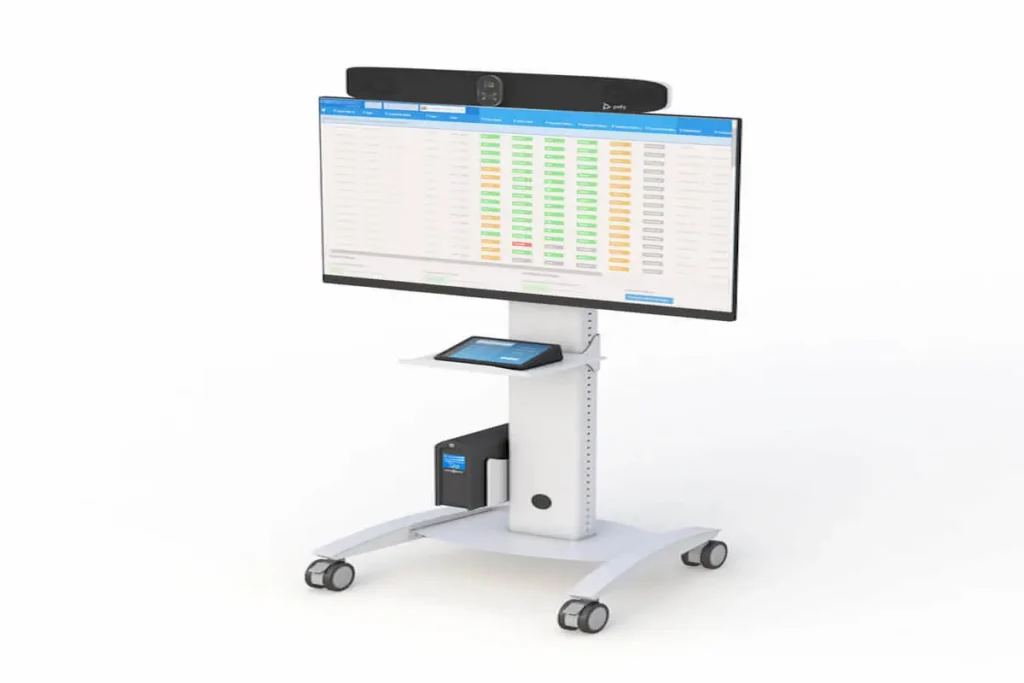
They act as mobile hubs for telemedicine, enabling video consultations, diagnostics, and patient monitoring. Competitors like Ergotron emphasize connected healthcare environments, highlighting the importance of integrating technology with patient care workflows.
What Types of Telehealth Carts Are Available?
Which Telehealth Cart Setup Fits Your Needs?
The right telehealth cart depends on your healthcare environment, patient needs, and workflow requirements.
Understanding the different types available can help you choose a solution that supports both current operations and future growth.
1. Mobile Telehealth Carts
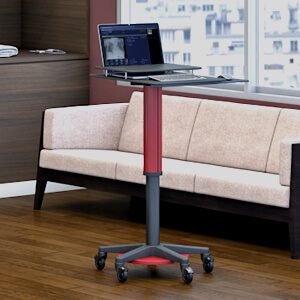
Mobile carts are designed for flexibility and easy movement between locations.
They are ideal for hospitals and clinics where care needs to be delivered quickly across multiple areas.
2. ICU and Critical Care Telehealth Carts
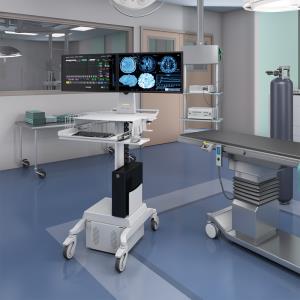
These carts are built for high-acuity environments where continuous monitoring is required.
They support advanced equipment and provide reliable performance in critical situations.
3. Telemedicine Consultation Carts
Consultation carts focus on communication and patient interaction.
They are equipped with cameras, microphones, and displays to support virtual visits.
4. Home Health Monitoring Carts
Home health carts are designed for remote patient monitoring outside traditional healthcare facilities.
They allow providers to track patient health and deliver care without requiring hospital visits.
5. Multi-Purpose Telehealth Carts
Multi-purpose carts offer flexibility for various healthcare applications.
They can be adapted for different departments, making them a versatile solution for growing healthcare systems.
How Do You Choose the Right Telehealth Cart?
What Factors Should You Consider Before Buying a Telehealth Cart?
Choosing the right telehealth cart requires evaluating mobility, device compatibility, power requirements, and workflow integration.
Consider how the cart will be used daily and what equipment it needs to support. Think about whether it will be used for patient consultations, monitoring, or emergency response. Integrating with systems like computer carts or ergonomic mounts can further optimize your setup.
How Do Telehealth Carts Improve Efficiency and ROI?
Telehealth carts improve efficiency by reducing travel time, increasing patient access, and supporting faster decision-making.
By enabling remote care, healthcare providers can see more patients in less time while maintaining high-quality service. This leads to improved productivity and cost savings. Over time, these benefits result in a stronger return on investment for healthcare organizations.
Where Are Telehealth Carts Making the Biggest Impact?
What Real-World Use Cases Show Their Value?
Telehealth carts are widely used in hospitals, clinics, emergency rooms, and home healthcare environments.
In hospitals, they enable remote consultations and patient monitoring. In emergency rooms, they provide quick access to specialists. In home healthcare, they allow patients to receive care without leaving their homes. Their ability to connect people and technology makes them essential in modern healthcare systems.
Conclusion: Choosing the Right Telehealth Cart for Better Patient Outcomes
Telehealth carts are more than just mobile equipment—they are critical tools for delivering efficient, connected, and patient-centered care. The right solution can improve workflow, enhance communication, and expand access to healthcare services.
If you’re ready to modernize your healthcare operations, explore telemedicine carts and equipment or connect through the contact page to find the right solution for your needs.