

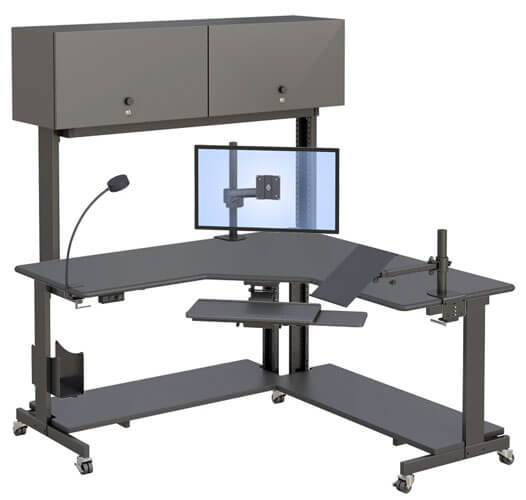
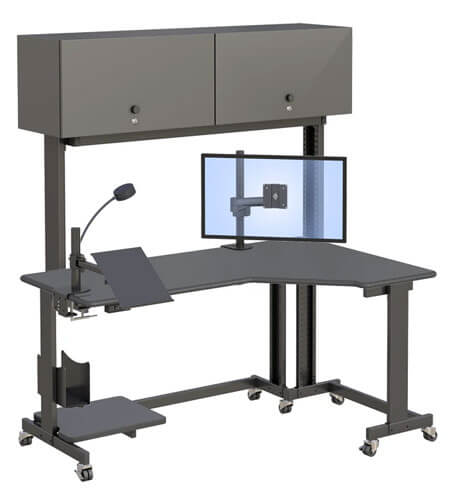
OEM Solutions for Industrial & Medical Workstations: Complete Guide 2026
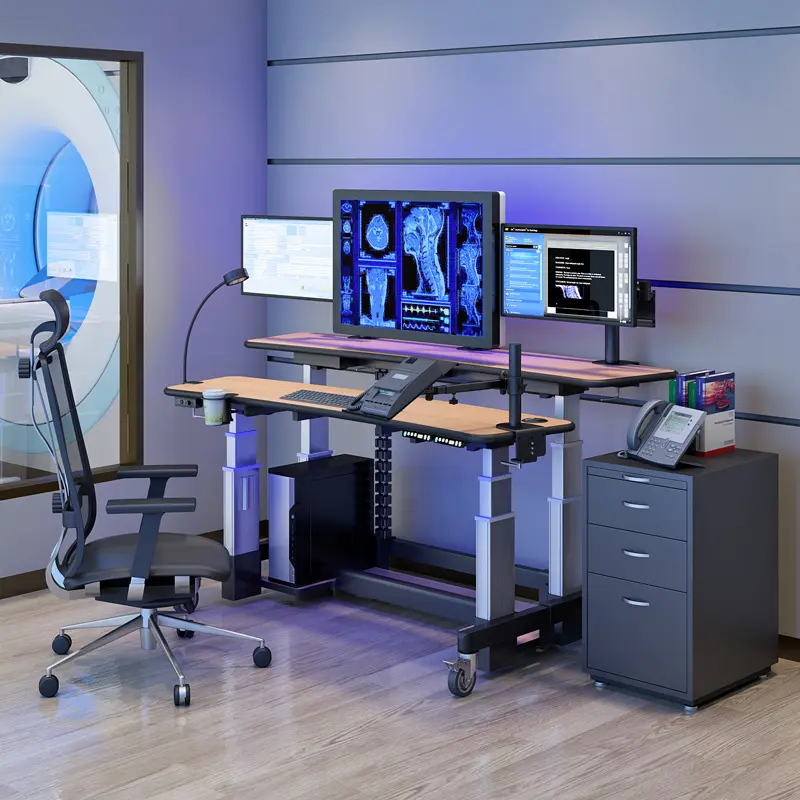
OEM Solutions for Industrial & Medical Workstations: Complete Guide 2026
OEM solutions represent the backbone of modern workstation manufacturing, enabling companies to build specialized equipment without starting from scratch. These partnerships connect system integrators with manufacturers who deliver custom solutions tailored to exact specifications. Many OEM solutions are available out of the box, allowing for immediate deployment with minimal customization, which streamlines the process and adds convenience. OEM partnerships also help turn innovative ideas and custom requirements into reality by transforming concepts into tangible, functional workstation solutions for a wide range of industries.
This guide covers design, integration, and deployment of OEM workstation solutions for both industrial and medical applications. System integrators, medical device manufacturers, and industrial automation companies will find practical insights here. Understanding these partnerships matters because they directly impact time to market, quality standards, and long-term reliability.
Direct Answer: OEM solutions provide customizable hardware and software platforms that enable manufacturers to build specialized workstations for industrial and medical applications, reducing development time while ensuring compliance with industry standards.
What you’ll learn:
- Core differences between OEM and commercial off-the-shelf products
- Industry-specific requirements for medical and industrial workstations
- Implementation strategies that accelerate time to deployment
- Cost considerations and ROI optimization approaches
- Solutions for common integration challenges
Understanding OEM Solutions in Workstation Manufacturing
OEM solutions differ fundamentally from commercial products. While off-the-shelf equipment serves general needs, OEM partnerships deliver products designed for specific applications. This approach provides greater flexibility, extended life cycles, and better integration capabilities.
The value proposition is clear. Manufacturers gain access to specialized engineering without building in-house expertise. End users receive equipment that precisely matches their operational needs. Additionally, this model supports scalable production as business demands grow.
OEM Power Solutions
Power delivery systems form the foundation of reliable workstation performance. OEM power solutions address specific voltage requirements, thermal management needs, and redundancy demands that standard power supplies cannot meet.
In industrial settings, workstations often face power fluctuations and harsh electrical environments. Custom power solutions incorporate surge protection, backup systems, and monitoring capabilities. Medical applications require isolation transformers and low leakage current to protect patient safety.
OEM Medical Solutions
Healthcare environments demand specialized approaches to workstation design. Regulatory requirements including FDA approval and IEC 60601-1 certification govern every aspect of medical equipment development.
Patient data security adds another layer of complexity. HIPAA compliance requires secure data handling throughout the workstation’s operation. Furthermore, infection control standards dictate materials, surface finishes, and cleaning compatibility.
Industrial OEM Applications
Manufacturing floors present unique challenges. Temperature extremes, vibration, dust, and moisture can quickly destroy standard equipment. Industrial OEM workstations address these demands through rugged enclosures, sealed components, and reinforced mounting systems.
Real-time processing capabilities support automation systems that cannot tolerate latency. These workstations integrate seamlessly with production line equipment, enabling the data-driven manufacturing environments that define modern industry.
Industry-Specific OEM Workstation Requirements
Building on these foundational concepts, specific applications require tailored approaches. Understanding these requirements helps partners deliver equipment that performs reliably throughout its operational life.
Medical Workstation Specifications
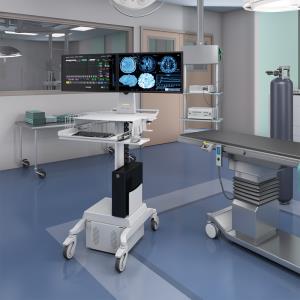
Medical device standards establish strict performance and safety requirements. IEC 60601-1 covers electrical safety, while additional standards address electromagnetic compatibility and software validation.
Infection control drives material selection and design decisions. Seamless surfaces, antimicrobial coatings, and chemical-resistant finishes enable thorough cleaning without equipment damage. Similarly, patient data security requires encrypted storage, secure authentication, and audit trail capabilities.
Anke collaborated with Dell Technologies OEM Solutions to develop a new generation of medical imaging CT systems, enhancing product performance and stability. Such advancements can improve sales performance and market competitiveness in the medical imaging sector.
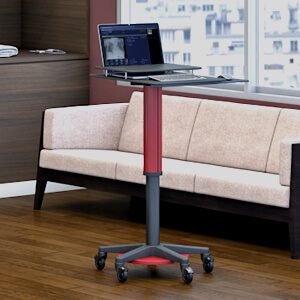
Healthcare organizations increasingly need mobile workstation solutions that maintain these standards while supporting point-of-care workflows.
Industrial Workstation Demands
Environmental resistance defines industrial workstation design. NEMA-rated enclosures protect against dust, water, and chemical exposure. Temperature specifications often span -40°C to 85°C for extreme environment applications.
Extended lifecycle support matters significantly in industrial settings. Equipment investments must deliver value over many years, requiring long-term component availability and obsolescence management. Real-time processing capabilities support automation systems that drive modern manufacturing efficiency.
Customization and Integration Options
Hardware modification capabilities range from simple mechanical adaptations to complete system redesigns. Manufacturers can specify exact dimensions, mounting configurations, and interface requirements.
Software development kits and API access enable integration with existing systems. Custom branding and aesthetic options help maintain consistent product identity across equipment lines. These capabilities transform generic platforms into distinctive products.
Data Center Solutions
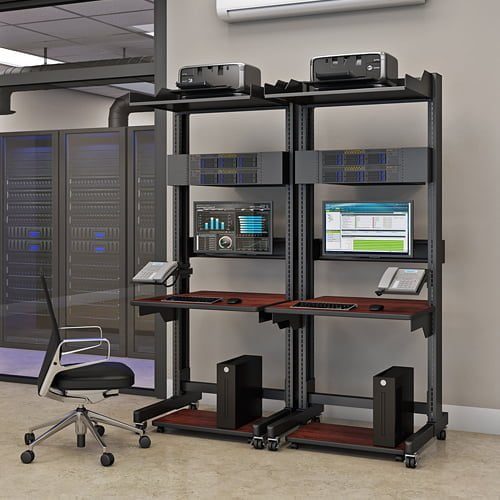
In today’s digital-first world, data center infrastructure is the backbone of business operations, powering everything from real-time analytics to mission-critical applications. Dell Technologies OEM Solutions delivers a full line of custom data center solutions designed to accelerate time to market and drive business success. By leveraging Dell’s extensive capabilities and innovative approach, customers can discover new opportunities and enhance their competitive edge with secure, reliable, and high-performance data center solutions.
Whether you’re building a new data center from the ground up or upgrading your existing infrastructure, Dell Technologies OEM Solutions provides a comprehensive suite of products and services tailored to your specific needs. Their scalable and flexible solutions empower organizations to manage data and applications with confidence, ensuring seamless deployment, robust security, and consistent reliability across all environments.
Dell’s commitment to quality and innovation means customers benefit from the latest advancements in data center design, management, and security. With worldwide support and a team of experienced engineers, technicians, and support staff, Dell Technologies OEM Solutions ensures your data center is always up and running—so you can focus on your core business and achieve your goals.
From initial design and deployment to ongoing management and maintenance, Dell Technologies OEM Solutions offers end-to-end support that helps customers escape the complexity and cost of traditional data center solutions. Their expertise enables businesses of all sizes—from small enterprises to Fortune 500 companies—to build, deploy, and manage data center infrastructure that is secure, scalable, and ready for the demands of today’s fast-paced markets.
By partnering with Dell Technologies OEM Solutions, you gain access to a trusted partner dedicated to delivering reliable, high-performance solutions that help you achieve success, manage your data with confidence, and stay ahead of the competition. Discover how Dell’s OEM data center solutions can help you close the gap between your current infrastructure and your future needs—sign up to learn more and take your business to the next level.
OEM Solution Implementation Process
Successful OEM partnerships follow established processes that minimize risk and accelerate time to market. Understanding this lifecycle helps organizations plan effectively.
Design and Development Phase
Requirements gathering establishes the foundation for successful projects. Clear technical specifications prevent costly mid-project changes.
- Define functional requirements and performance targets
- Establish regulatory compliance pathways
- Develop prototypes and validate against specifications
- Complete testing and certification processes
- Prepare for production scaling
Timeline planning accounts for design iterations, component sourcing, and regulatory approvals. Medical applications typically require longer certification timelines than industrial products.
Manufacturing and Quality Assurance
Production scaling demands careful supply chain management. Quality control standards ensure consistent output across production runs. Configuration management maintains version control throughout the product lifecycle.
ISO 9001 certification provides baseline quality assurance, while industry-specific standards add additional requirements. Testing procedures verify that each unit meets specifications before deployment.
Comparison Table: Build vs Buy vs OEM Partnership
| Criterion | In-House Build | Commercial Purchase | OEM Partnership |
| Development Cost | Highest | Lowest | Moderate |
| Time to Market | 12-18 months | Immediate | 4-8 months |
| Customization | Complete | Limited | Extensive |
| Technical Risk | Highest | Lowest | Shared |
| Long-term Support | Self-managed | Vendor-dependent | Contractual |
For most applications, OEM partnerships offer the best balance of customization, speed, and manageable risk. Organizations exploring these options can learn more about partnership approaches that align with their specific needs.
Common Challenges and Solutions
Every OEM implementation encounters obstacles. Recognizing common challenges helps teams prepare effective responses.
Regulatory Compliance Complexity
Early engagement with experienced OEM partners simplifies compliance pathways. Partners with established certification experience navigate regulatory requirements efficiently, reducing delays and unexpected costs.
Long-term Support and Lifecycle Management
Extended lifecycle agreements ensure component availability throughout product life. Proactive obsolescence management identifies at-risk components before they impact production. Spare parts planning supports field service operations.
Cost Management and ROI Optimization
Total cost of ownership analysis reveals the true value of OEM partnerships. Volume pricing and long-term agreements improve economics. Quality improvements reduce warranty costs and enhance customer satisfaction.
Technical Integration Challenges
Thorough requirements definition prevents integration problems. Comprehensive testing protocols verify compatibility before deployment. Clear communication between engineering teams ensures alignment throughout development.
Conclusion and Next Steps
OEM solutions enable specialized workstation development that would otherwise require massive internal investment. The right partnership delivers equipment that meets exact specifications while reducing development risk.
Take these steps to move forward:
- Assess current workstation needs and identify capability gaps
- Evaluate potential OEM partners based on industry experience
- Define detailed requirements before engaging in formal discussions
For organizations ready to explore OEM partnership opportunities, connecting with experienced providers starts the conversation toward solutions that address specific operational needs.
Talk with experienced OEM providers to explore collaboration and innovative solutions tailored to your business. Lenovo OEM Solutions provides reliable, secure technologies out of the box or tailored to fit your needs. Lenovo OEM Solutions are marked by strong engineering capabilities to modify products, build new solutions, or completely customize existing platforms based on business needs.
Frequently Asked Questions
What are OEM solutions and how do they differ from standard products?
OEM solutions are customized hardware and software platforms manufactured to buyer specifications. Unlike standard products, they offer tailored features, custom branding, and integration capabilities designed for specific applications.
How long does OEM workstation development typically take?
Development timelines range from 4-8 months for straightforward projects to 12+ months for complex medical devices requiring regulatory certification. Early planning and clear requirements accelerate the process.
What certifications do medical OEM workstations require?
Medical workstations typically require IEC 60601-1 electrical safety certification, FDA registration, and compliance with relevant electromagnetic compatibility standards. Specific applications may require additional certifications.
How do OEM partnerships manage component obsolescence?
Experienced OEM partners implement proactive obsolescence management programs. These include long-term component sourcing agreements, alternative component qualification, and regular product lifecycle reviews.
What factors determine OEM solution costs?
Costs depend on customization complexity, volume requirements, certification needs, and support expectations. Volume commitments and long-term partnerships typically improve pricing significantly.
Can existing workstation designs be adapted through OEM partnerships?
Yes, many OEM partnerships involve adapting existing platforms rather than ground-up development. This approach reduces costs and accelerates deployment while still delivering custom solutions.
What ongoing support do OEM partnerships typically include?
Support commonly includes technical assistance, software updates, spare parts availability, and warranty services. Extended lifecycle support agreements ensure availability throughout the product’s operational life.