
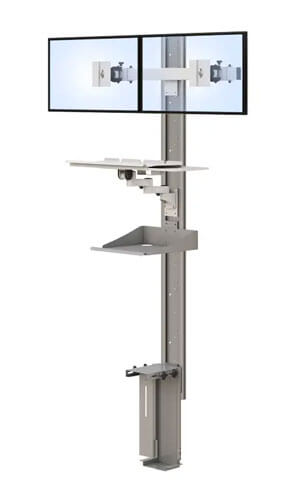
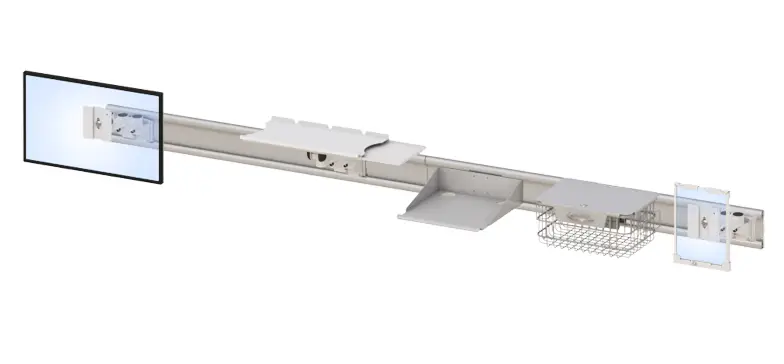
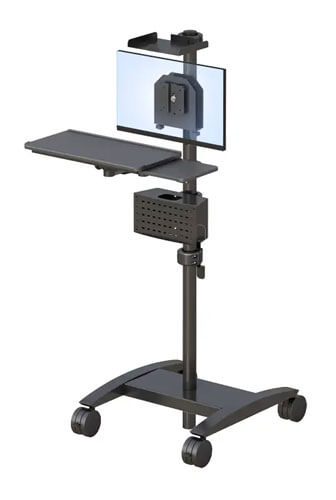
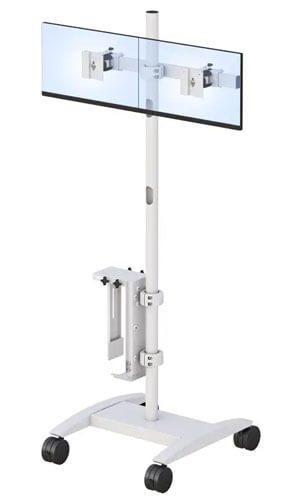
Healthcare Medical Computer on Wheels
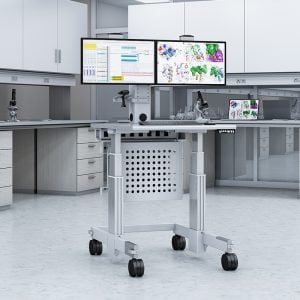
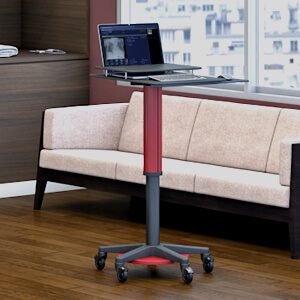
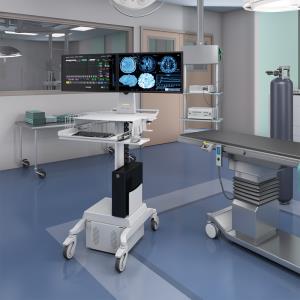
The healthcare medical computer on wheels is a mobile clinical workstation designed to support documentation, data access, and device use in fast-paced healthcare environments. It provides healthcare professionals with a flexible workstation on wheels that brings computing equipment directly to the point of care.
Used across hospitals and medical settings, this type of medical computer cart supports patient care by reducing room-to-room movement and improving workflow efficiency. Clinicians and nurses can access systems, devices, and documentation tools without leaving the patient environment.
As one of several types of medical computer carts used in hospitals, this workstation on wheels supports healthcare professionals by bringing computing equipment directly into patient care areas, helping teams work more efficiently at the point of service. Designed and manufactured by AFC Industries, this solution emphasizes configurability, mobility, and long-term durability for institutional buyers.
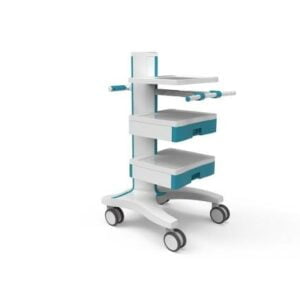
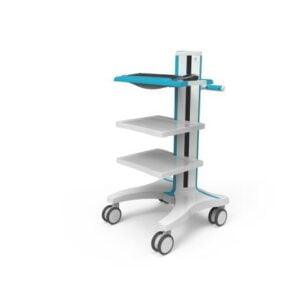
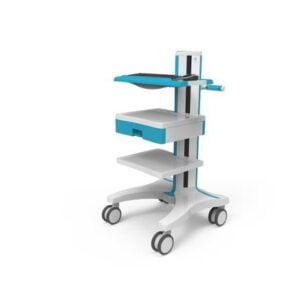
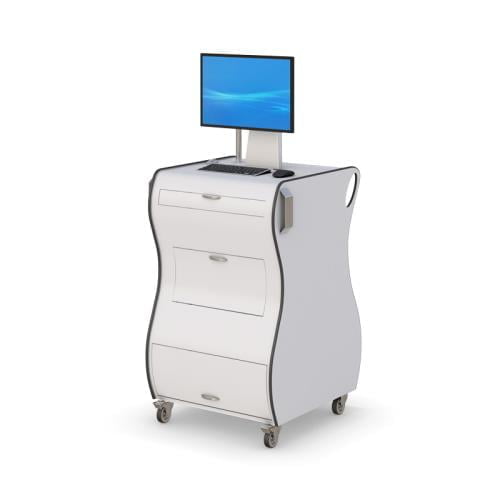
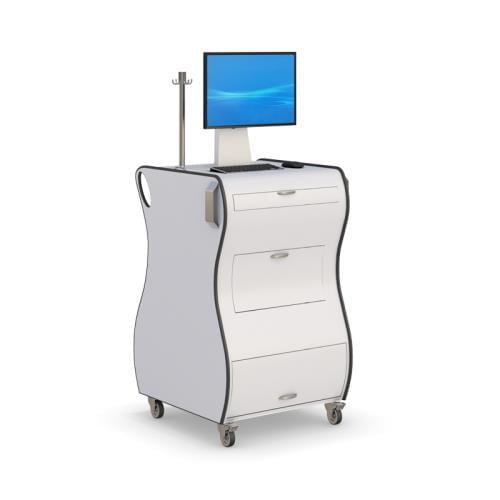
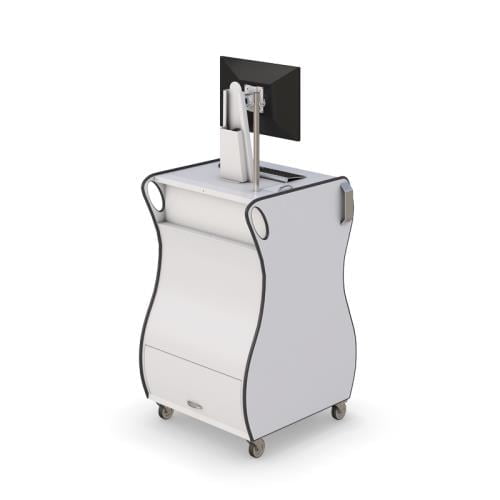
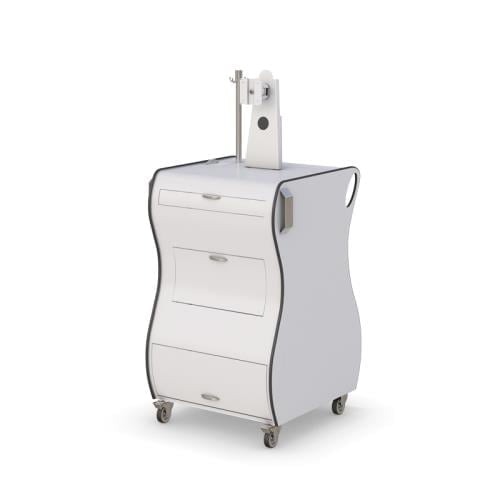
Rolling Medical Computer on Wheels
- Monitor bracket: VESA75/100mm
- 3″ locking caster wheels with lockable front set
- Wire management system with hook for cable and cable box with rear removable panel
- Storage includes: pull out drawer, pull out file cabinet, bottom front storage for peripherals with rear access door
- 41″ height of the cabinet, 21.23″ width and 23.31″ depth
- Rear grommet hole
- Side handle
- Height: 41″
- Width: 21.23″
- Depth: 23.31″

Description
What Is a Medical Computer on Wheels (COW or WOW)?
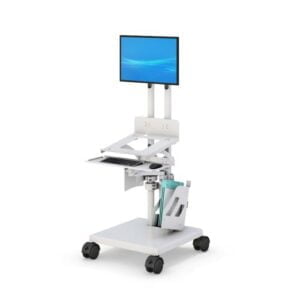
A healthcare medical computer on wheels—often referred to as a COW or WOW—is a mobile workstation that allows clinicians to transport computers, monitors, tablets, and accessories throughout a hospital or clinic. These computer carts are commonly used for bedside documentation, electronic medical record access, telemedicine support, and clinical workflows requiring real-time data entry.
Unlike fixed workstations, a workstation on wheels adapts to different users and rooms throughout the day. Whether deployed as powered or non-powered carts, these mobile solutions support productivity by keeping computing equipment close to where care is delivered.
Key Features
- Mobile workstation design
Built with wheels and durable casters to support smooth mobility between rooms and departments. - Locking casters for stability
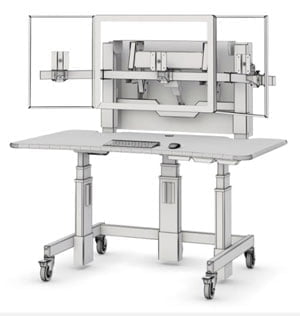
Locking casters help secure the cart during documentation, keyboard use, or monitor interaction. - Height-adjustable configuration. Supports sitting or standing use to accommodate different clinicians and ergonomic preferences.
- Device and monitor support
Designed to support computers, laptops, tablets, and medical computer devices based on workflow needs. - Monitor, keyboard, and mounting support.
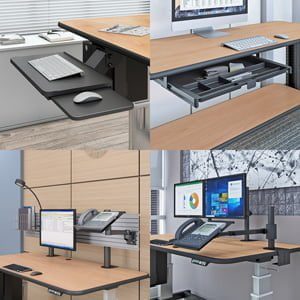
Designed to mount monitors, keyboards, tablets, and computing devices using configurable mounting options that accommodate different workflows. - Slide-out tray and work surface options
Configurations may include a slide-out tray or an integrated work surface for keyboard and documentation tasks. - Cable and accessory management
Helps organize equipment, power accessories, and supplies to maintain a clean workspace.
Specifications (What Buyers Need to Know)
Specifications vary by configuration. Common considerations include:
- Cart form factor
Lightweight configurations designed to support mobility in busy medical settings. - Power approach
Available as powered or non-powered, depending on clinical and IT requirements. - Device compatibility
Designed to support medical computers, laptops, tablets, monitors, and related equipment. - Caster and wheel design
Casters with braking functionality to support controlled positioning. - Materials and finishes
Selected to support routine cleaning and use in healthcare environments. - Workflow capacity
Designed to accommodate equipment, documentation tools, and supplies without reducing mobility.
Final specifications are confirmed during configuration to ensure proper fit within hospital workflows.
Typical Use Cases
- Hospitals supporting bedside documentation, medication review, and patient care workflows across multiple rooms
- Nurses and clinicians are moving between patient rooms.
- Telemedicine and virtual care workflows
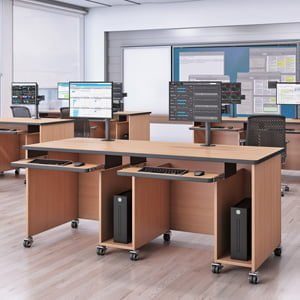
- Shared clinical workstations and documentation areas
- Training and education environments
Medical computer carts are often deployed alongside other mobile equipment to support efficiency and workflow consistency across departments.
FAQs
What devices can the healthcare medical computer on wheels support?
Configurations may support laptops, medical computers, tablets, monitors, keyboards, and related devices.
Are powered and non-powered carts available?
Yes. Healthcare organizations may choose powered carts or non-powered carts depending on workflow and facility needs.
Is the cart suitable for hospital environments?
Yes. It is designed for use in hospitals, clinics, and other healthcare environments requiring mobility and durability.
Does it include locking casters?
Locking casters are commonly used to support stability during documentation and device interaction.
Can it be configured for specific workflows?
Absolutely. AFC Industries supports workflow-specific configuration for nursing, telemedicine, and clinical documentation use.
How do we request pricing or a quote?
Pricing and configuration details are provided by request. Contact AFC Industries to discuss requirements and receive a tailored quote.
Request a Quote
If you are evaluating a healthcare medical computer on wheels to support clinicians, documentation, and patient care workflows, AFC Industries provides engineering support, OEM configuration, and reliable manufacturing quality. Request a quote to review options, layouts, and deployment needs with our team.